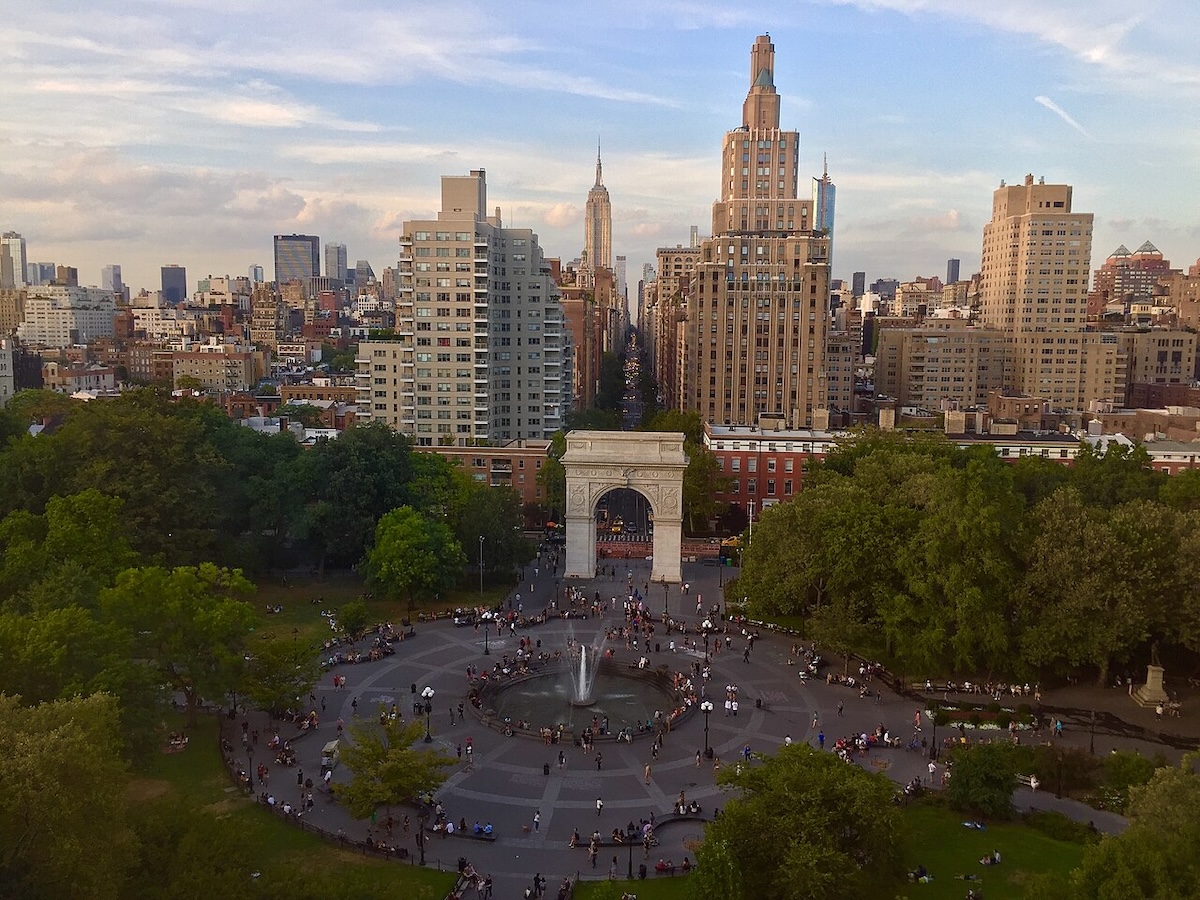
Photo: Isabella Ruffalo-Burgat via Wikimedia Commons
Free West Village, Greenwich Village, and SoHo News: Delivered To Your Inbox
A federal jury on Wednesday convicted John Livigni for his role as a leader of the drug conspiracy that prosecutors say turned Washington Square Park into an around-the-clock open-air drug market. But according to prosecutors, the dealers he supplied and directed worked their own territory nearby.
That territory was a stretch of Sixth Avenue about a block northwest of the park, according to the U.S. Attorney’s Office. Prosecutors said members of that team made sales every day, working in shifts and sending the profits back to Livigni. He also had agreements with the other dealers in the park to divide up territory, share workers, keep out unauthorized competition and warn one another when police were in the area, prosecutors said.
Justin Barry, who testified that he worked under Livigni, told jurors the group was called the “Yellow Bag Boys,” after the color of the packaging it used for crack cocaine, according to the New York Times. Barry said dealers worked three shifts, 9 a.m. to 5 p.m., 5 p.m. to 2 a.m., and 2 a.m. to 8 a.m., and that a single worker could sell up to 200 glassines of heroin and 180 bags of crack in one shift. Prosecutors said the operation grossed at least $50,000 a week, including payments in stolen merchandise and public benefit cards. Barry pleaded guilty in the conspiracy and is awaiting sentencing, the Times reported.
The jury found that the conspiracy caused deaths and serious injuries to people who overdosed on its drugs. Among them was Bailey Shaw, 18, a recent high school graduate from Colorado who had moved to the city for a Broadway internship. Shaw died on June 3, 2024, after overdosing on fentanyl a friend had gotten from a member of Livigni’s conspiracy, according to prosecutors.
On Nov. 24, 2024, Bethany Hine, 43, died after overdosing on fentanyl she’d gotten from a member of the conspiracy. Prosecutors said Livigni’s dealers had a practice of giving Hine, who was homeless, fentanyl, heroin and crack every morning in exchange for Livigni taking and using her government benefits card. Her body was found in a doorway, surrounded by syringes and empty drug bags.
Two weeks earlier, on Nov. 11, 2024, Antonia Hayes was found on a park bench after overdosing on fentanyl she’d gotten from a member of the conspiracy. She survived after paramedics gave her multiple doses of Narcan, according to prosecutors. The Times reported that Hayes was one of the people with addictions whom the conspiracy’s leaders used to make hand-to-hand sales.
Livigni was convicted of one count of narcotics conspiracy resulting in death and serious bodily injury. He faces a mandatory minimum of 20 years in prison and a maximum of life, and he’s scheduled to be sentenced on Jan. 22, 2027, by U.S. District Judge Denise L. Cote. The jury acquitted him of a separate gun possession charge, according to the Times.
His lawyer, Elena Fast, said the defense would appeal the conspiracy conviction. At trial, Livigni’s lawyers argued that his operation didn’t run drug sales in the park and instead sold two blocks away, and they denied that he conspired with the park’s dealers. Fast also told jurors there was evidence the drugs that killed Shaw and Hine and nearly killed Hayes came from other networks unaffiliated with Livigni. “Everybody sells in the park,” she said.
Livigni’s conviction follows those of 20 other defendants in the conspiracy, according to the U.S. Attorney’s Office. Numerous members were arrested in October 2025. Police Commissioner Jessica Tisch credited officers in the Sixth Precinct, who surveilled the park for years, and detectives who directed undercover buys, work that led to the arrests of key cooperators in the case, the Times reported.
“Livigni’s conviction sends a clear message that there will be zero tolerance for anyone who floods our communities with drugs,” Tisch said in a statement.